“You’re the writer.”
Not a question, an observation. That’s the first thing Chandresh Bhardwaj said to me when I walked into Studio 4 at Hotel Arena. How does he know? I thought to myself, a little stunned, “Yes, I am,” I responded, my smile unable to contain my delight. The funny thing about rebirth is that at first it kind of feels like being a kid and deciding to go by a different name for a day - at first, refusing to answer to your real name is just playful mischief; but when the adult in the room joins in and calls you by your chosen name, it’s impossible not to widen one’s eyes in surprise.
I came across Chandresh on Instagram a good while ago and was intrigued by his grounded honesty combined with what feels like a rebel flair against the over-hyped gentrification of spirituality. His posts, which range from “If goddess Kali appeared today, she would be cancelled” to “To be an artist, it helps to be a little weird”, go totally against the norm of today’s short-format click-baity social media content. His texts are long and the visuals are pleasing but simple, just words against plain earthy-toned backgrounds - which means the words themselves must carry the weight, hook the reader’s attention with their meaning alone. And they do. With over 280k followers, sold-out talks around the world, a podcast, a book and another one soon on its way - people want to listen to what Chandresh has to say.
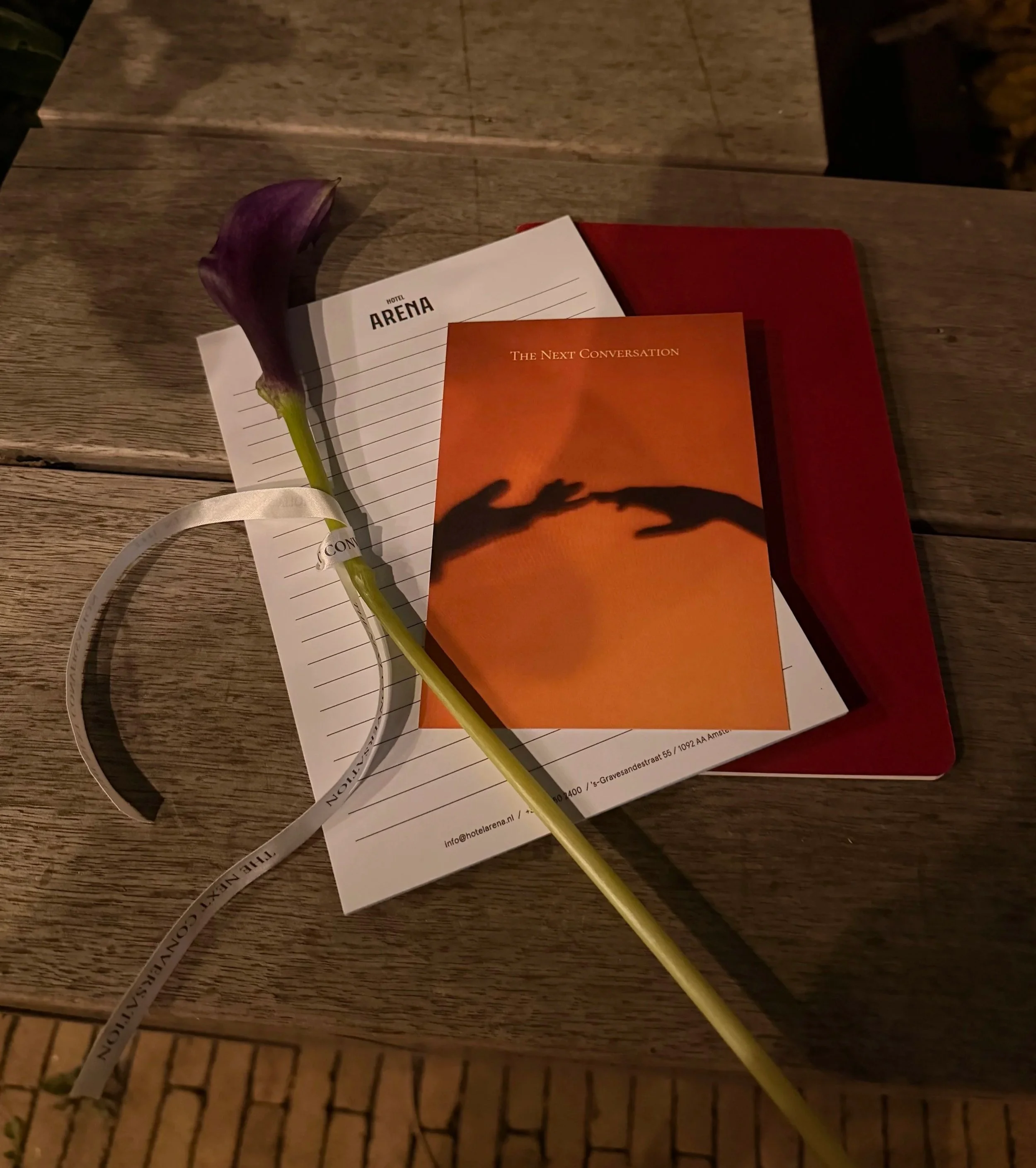
I found myself in one of such sold-out talks, which he began by going straight into its heart: why is it that spaces like these are so popular nowadays? Why is it that so many people are suddenly compelled to find meaning, purpose, answers to questions that are no longer dormant and not even merely alive, but raging and burning wildly inside? He gently steered us to reflect on the disconnect our adult selves feel from the dreams and hopes our child selves originally held. We are constantly jumping from one to the other, and this jump from critical adult to curious kid stresses the inner child out, cornering her. We are left in a state of perpetual subconscious longing for the one we left behind, and this longing can easily transform into subconscious anxiety.
The undercurrent of that is unconscious loyalty to fear and to our ancestors’ baggage. Chandresh posed us an unusual question: if you had to sabotage your dreams, how would you do it? The room laughed, for who in their right minds would consciously sabotage one’s dreams? But if we actually think about it, most of us are already doing it. Doom scrolling instead of writing. Staying in that job that drains us, because it provides safety. Dragging out a dysfunctional relationship, because it gives us a sense of belonging. “Spirituality”, he said, “is the study of one’s consciousness, and rebirth happens when we embody what we learned”.
But as I said in the beginning, rebirth is a funny thing - and he explained why. There is no reference for rebirth. The models we’re pushed on social media of rebirth as this beautiful cinematic experience out of which we emerge with glowing skin and impeccable hair - is a lie, and a lie we’re pushed to conform to. Real rebirth is raw, messy and ugly - much like birthing and being born. I’m at that age where many of my friends are having their first babies, and the general consensus is that the real birthing experience is nothing like that romcom “magical miracle of life” women are sold as girls. We come into this world screaming, wrinkled and covered in blood and other fluids - so why would any other rebirth within this lifetime be any different?
So if it’s this gory and gruesome, why would anyone consciously decide to be reborn? Chandresh led us through a reflection on the exhaustion we feel by being the person everyone else expects us to be, and openly shared about some of the labels and crowns he’s been forced to carry throughout his life. As the seventh-generation tantra teacher in his lineage, he was born in a spiritual family and expected to have a higher understanding of topics like death and desire. When loved ones passed away, he was expected to be comprehensive, not to cry. When as a teenage boy he said a celebrity was beautiful, his friends laughed and told him he couldn’t say that, “because he was supposed to be the spiritual one”. He invited us to pick three words that describe the person we learned to become and with those, a set of three more questions:
Which word gives me exhaustion and which one gives me freedom?
When do I feel I am betraying my identity?
Where am I loyal to the identity that was given to me, versus my own definition of her?
Mine came to me easily, while for others in the room it was a hard question to answer - which Chandresh reassured us was totally okay. “Insight won’t come in an auspicious moment,” he said, “it will come on a random Wednesday morning when you’re getting coffee - and you will know it”. The point here is to be attuned to oneself, and listen.
Sensing the unease in the room (including my own, as I started to spiral on the realization that I was still more frequently loyal to the identity given to me rather than the one I claimed for myself), Chandresh introduced a change of direction: the idea that rebirth happens in cycles of seven. He had mentioned before that the journey of rebirth is about the one we left behind - the child and her untainted dreams. In the first seven years of our life, we’re still closer to our past life than this one, and as we grow, we’re given the chance to cross many bridges, each one a new rebirth. I found that quite beautiful: we start with a phantom attachment to the otherworldly realm of what was before, now made unreachable by the new body we inhabit in this new life. But that is precisely what makes our dreams in that period so pure - it is that ‘floating in the aether’ quality that preserves them and holds them undiluted by expectations of others. The soul as an amniotic fluid of sorts, containing our dreams as it settles in its new vessel. The further we walk away from it, the more bridges we meet, and with each bridge, a choice.
“So every seven years I’ll automatically be reborn?” someone asked. “That would be wonderful, wouldn’t it?” Chandresh made the room laugh, and reminded us that we are conscious choice-makers. If we do nothing in those seven years, the universe has its funny way of putting us right back at the foot of the bridge we did not cross, and we won’t move past it until we consciously choose to do so. That’s why when we are shielded from experiencing certain painful, but necessary experiences, we delay our growth and remain stuck. Then, we will certainly find ourselves back at the foot of the bridge we neglected. I quickly did the math in my head, and realized I’m wrapping up my 35th year, about to start my 36th. It certainly feels like I’m arriving at the foot of a new bridge - one that I’m very excited to cross.
“So how do I know if I made a good or bad choice?” someone else asked, “How do I know if I’m being loyal to my identity, or to the one that I was assigned?” I nodded, alongside many others in the room, resonating hard with the question. Chandresh explained there are no good or bad choices, but conscious or unconscious ones. The conscious choice is the one that stems from safety, aliveness, freedom, hope, or compassion. The unconscious choice is the one that feels rushed, that stems out of fear. It can be stressful to deal with the latter, and so he gave us a mantra to help us feel centered again in those moments:
“I will fall into the trap of my old identity, but I will return to my heart.”
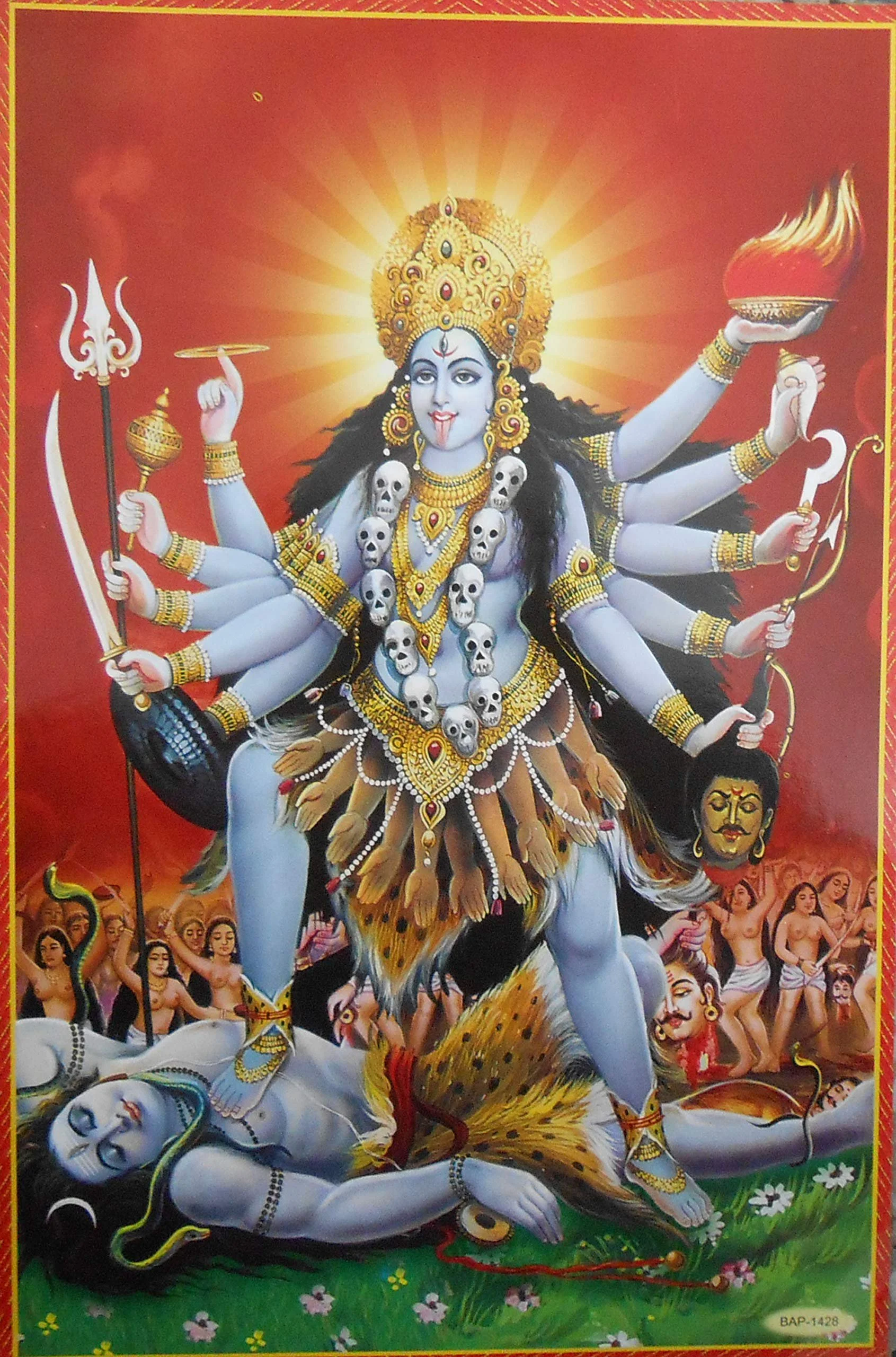
After a short break, Chandresh introduced the concepts that title his talk: the Rooted Masculine (Shiva) and the Wild Feminine (Kali). He praised the beautiful symbolism of the image of Shiva laying on the ground with Kali stepping over his heart. The Rooted Masculine brings the containment that allows you to grow, while the Wild Feminine is the sensual, living embracement of the senses that yearns to create. And with that, a new set of questions:
Rooted Masculine: where in your life do you need more structure? More boundaries? More conscious choice-making? Where has your structure become your control?
Wild Feminine: where in your life do you need more movement? More creativity? More softness? More conscious desire? Where has surrender become self-abandonment?
How can I help the Rooted Masculine and the Wild Feminine meet?
As I reflected on the final question, I thought about the three words I had picked for myself earlier, to describe the person I had become. Responsible, hard-working, independent. All three are very masculine-coded, and pose an invitation to nurture the wild feminine a little more. “The purpose of rootedness is not to control you, but to give your wild somewhere safe to belong,” Chandresh said gently, as if reading my critical thoughts, “Create roots for the version of you that has always existed.”
During the final meditation, I went back to what he said to me at the start: “You’re the writer.” Unknowingly, Chandresh rooted the identity I’ve been gestating in the final years of my current seven year cycle; the identity I wish to take forth as the new one begins. And for that and all the lessons generously shared last night, I am grateful.
