Beyond the Devil and the Darkness
Some weeks ago in Dutch class I learned that ‘matches’ are called ‘lucifers’ here - and I couldn’t stop thinking about it since.
Like Stranger Things’ villain Vecna, the Devil has many names - and Lucifer is just one of them. It originates from ‘lux’ = light + ‘fer’ = bearing, which makes a lot of sense for matches, but not so much for the entity mostly associated with darkness. It’s important to remember that in Christian tradition, Lucifer was the brightest, greatest of angels before his downfall. In his representation as the Devil in tarot, his card is one of only two cards in the Major Arcana with a pitch black background, and he’s an angry, horned, winged and bearded half-man-half-goat.
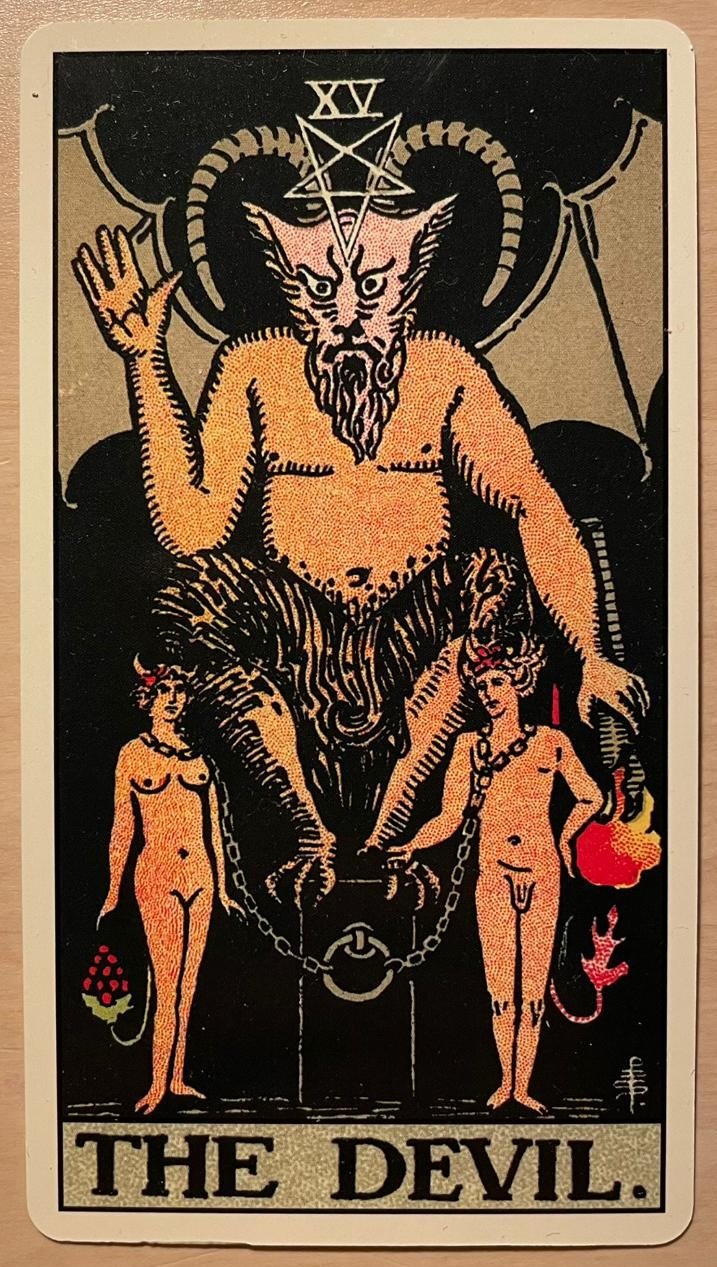
The Devil tarot card.
So if both matches and Lucifer are named as “light-bringers”, why is it that the image of the Devil himself is so dark? The chains around the necks of the human figures in the tarot card contain a clue. They could be easily lifted off, and yet both humans remain stuck there, willingly chained to the pedestal over which the Devil stands. The pedestal itself contains another clue: it’s the only two-dimensional image in the entire picture.
Rather than chaining us to darkness, the Devil actually represents the part of us that urges us not to look deeper, to stay in the surface, where light can still reach. When we reach into our shadows and make friends with the demons made up by our own minds, the chains lift and the Devil no longer has a hold of us. The two-dimensional pedestal over which he stands is the obvious, but often disregarded reminder that our experience is flattened when we linger in the superficial. True freedom awaits beyond the demons, just after the darkness.
